In-home and center-based ABA therapy side by side
| Center-based therapy | In-home therapy | |
|---|---|---|
| Where therapy happens | A center with play, art and group rooms | Your home environment |
| Who is there | Other children and a therapy team | Your child, the therapist and a caregiver |
| Often suits | Ages 2 to 6, not in school yet or getting ready for kindergarten | Older children and adults, or behaviors that happen mostly at home |
| Best for practicing | Social skills, play with peers, group time | Dressing, meals, bedtime and other daily routines |
| Hard parts | The drive, and a new place to get used to | Someone in your home during sessions, fewer peers |
Which ABA therapy setting fits which child?
Your child's goals should pick the setting. The Council of Autism Service Providers, which writes practice guidelines for applied behavior analysis (ABA), puts it this way: "The patient's clinical needs and targeted goals should determine the location(s) where ABA services are delivered."
Rachel Kolb, MA, BCBA, of the Autism Society of North Carolina, an outside expert not affiliated with Latitude, adds: "For children who have not yet started school, clinic-based services offer an environment in which they can develop comfort with routines outside the home."
To decide:
- List the skills that matter most right now, like talking, playing with other kids or getting dressed.
- Ask the BCBA (the board certified behavior analyst who leads your child's plan) which setting those goals need.
- Check who can be home during sessions.
- Ask our intake team what is open: center days, or in-home openings in your area.
Can my child do both, or switch later?
Ask our intake team. Using both settings, or moving from one to the other, depends on your child's treatment plan and our openings.
The Autism Society of North Carolina says a hybrid can be considered, with some hours at home and others at a clinic. At our centers, moving from part time to full time depends on space.
Is in-home or center-based ABA better?
Very little research compares the two. The study most often cited leans toward the center, but it is not proof. Researchers read the records of 313 children ages 3 to 12 who got home-based ABA therapy or center-based treatment at one provider in 2015.
Children mastered more learning targets per hour at the center. Only 44 of the 313 had both settings, and they "mastered 100% more per hour while at the center than at home."
Know its limits before you decide:
- Children were not placed at random. Parents and staff schedules picked the setting.
- The center children got about 3.5 more hours a week, and hours mattered too.
- It covers one provider's program, and the authors call their findings preliminary.
- It counted targets learned in sessions, not how skills carried over to daily life.
Catherine Lord, PhD, an autism researcher quoted by the Child Mind Institute, an outside expert not affiliated with Latitude, says the worry at home is that a child's different therapists may not work together well: "There are more people to see how things are going, detect problems, discuss problems with. At home, there are fewer minds working on things."
In words: 241 children had home sessions and 72 had center sessions. Only 44 had both. Children were not placed at random.
Source: Dixon and colleagues, Behavior Analysis in Practice (2017), records of 313 children at one provider.
What a week of ABA therapy looks like, and what parents do
At a center, you drop your child off and pick them up on set days. At home, sessions run at times you plan with our team, and a caregiver over 18 stays in the house during each therapy session.
Center: Monday to Friday, 8:30 a.m. to 4:30 p.m., or part-time hours.
- Your child works mostly one-on-one with an RBT (registered behavior technician), sometimes with one other child, under a BCBA.
- Circle time, group games and recess give daily practice with peers.
- School readiness work includes reading, tracing, cutting, the days and months, and communication with other kids.
- We encourage at least one meeting a month with your child's BCBA to go over goals and what to practice at home.
Home: a BCBA first assesses your child at home, and you talk about the skills and routines that are hard. Then an RBT runs one-on-one in-home sessions on that plan and records progress data, under BCBA supervision.
Session times depend on your schedule and our staffing. You do not have to sit in the room the whole time, and family training is part of the service.
If both parents work full time, a center day can be easier to plan around than a home schedule.
Does Missouri insurance cover both settings?
Both settings can be covered. Missouri's autism insurance law covers medically necessary ABA under a treatment plan and names no setting.
MO HealthNet's ABA rule says services "must be delivered in a clinically appropriate setting for the behavior being treated." Whether ABA therapy takes place at home or in a center, the treatment plan goes to your insurer to approve the hours.
Where Latitude offers each around St. Louis
Latitude Therapy has ABA centers in Bridgeton and St. Peters for ages 2 to 6, and offers in-home ABA around St. Louis from age 2 through adulthood where staffing allows. Talia, an occupational therapist, started Latitude so no child misses therapy because of a long waitlist or a long drive.
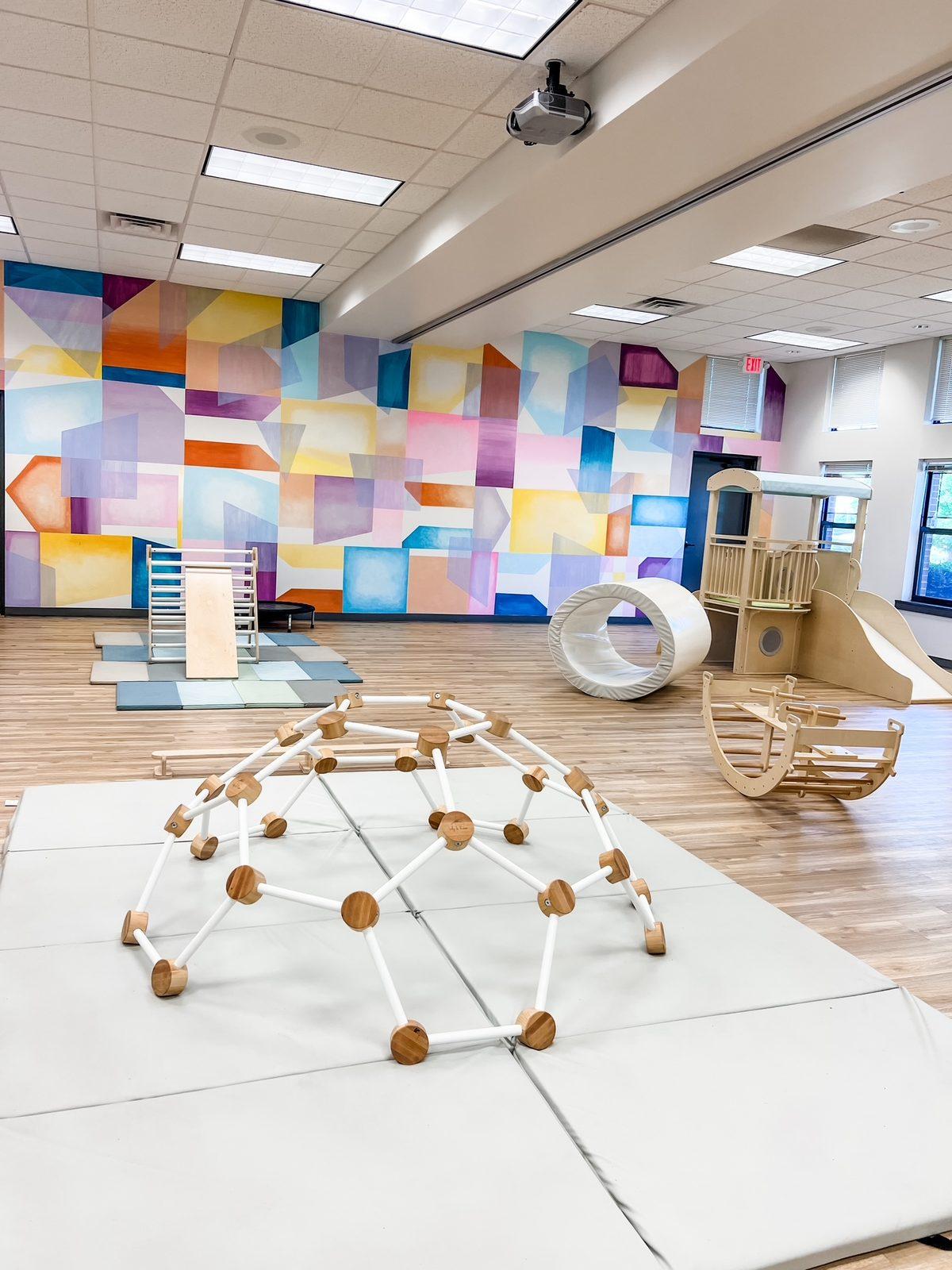
- Bridgeton ABA center, St. Louis County: an Imagine play room, a gross motor room for big-body play, and speech and OT on site through Conquer Therapy.
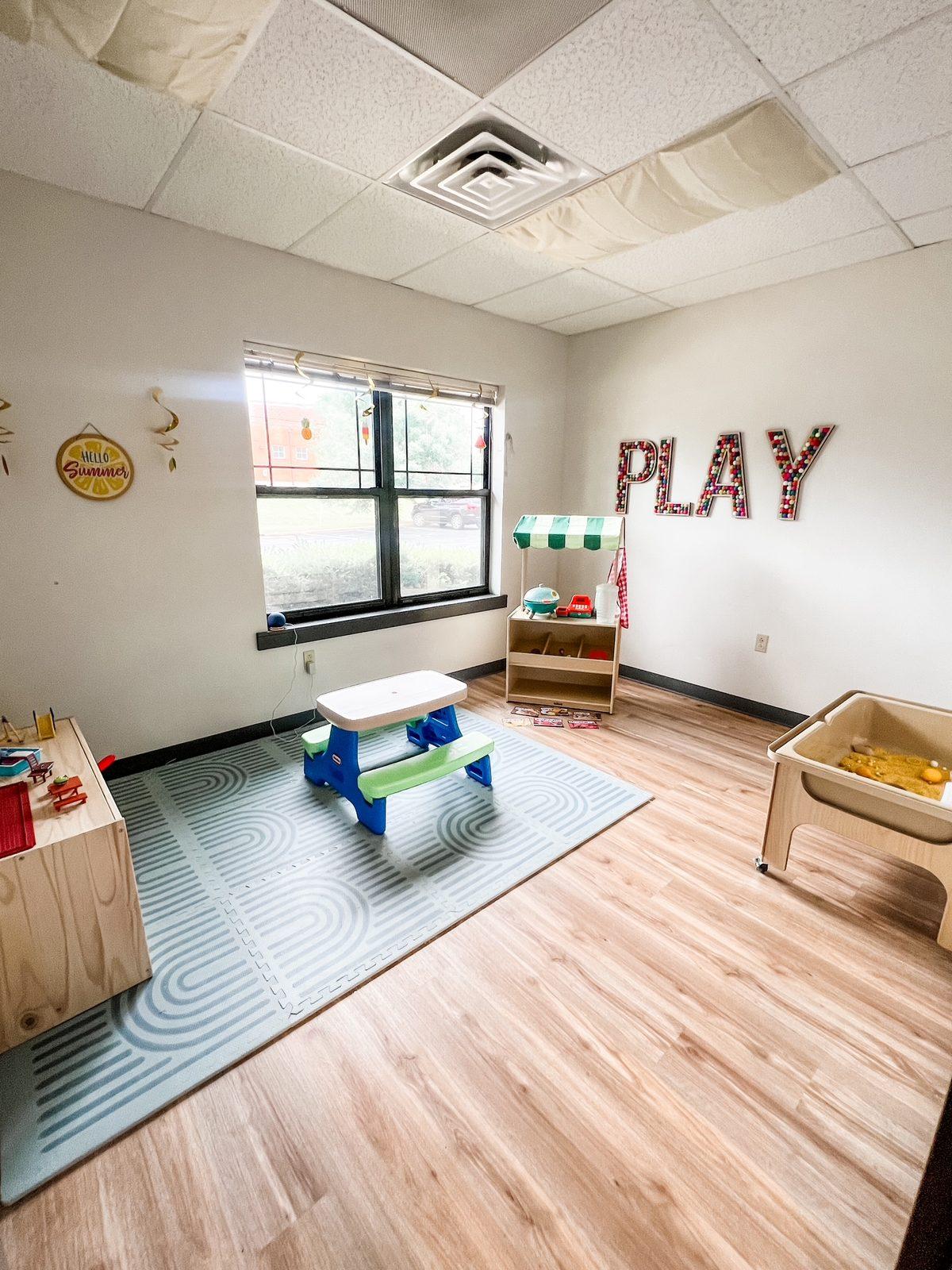
- St. Peters center, St. Charles County: art and play rooms, and speech and OT on site through Sensory Solutions.
- In-home ABA therapy: openings depend on your area and our staffing, so ask our intake team first.
As of November 2026, neither center has a waitlist. We aim to start therapy within 30 days, depending on the assessment and insurance approval. Call intake at 314-410-9670.
Sources
Outside figures and quotes were checked against the linked pages. Outside sources are not affiliated with Latitude.
- Dixon, Burns, Granpeesheh and colleagues: A Program Evaluation of Home and Center-Based Treatment for Autism Spectrum Disorder, Behavior Analysis in Practice
- Council of Autism Service Providers: Applied Behavior Analysis Practice Guidelines, version 3.0 (2024)
- Autism Society of North Carolina: ABA services for young children, home or clinic-based?
- Child Mind Institute: How to know if your child is getting good ABA
- RSMo 376.1224, autism coverage in health benefit plans
- 13 CSR 70-98.030, MO HealthNet applied behavior analysis services (Cornell LII copy)